Returning to work after a multi-year caregiving or personal break
Re-entering the professional landscape with refreshed skills and pride in your caregiving history.
Browse by situation
Start with a feeling or constraint, then see which routes may be relevant.
Evidence-Informed Topic Guides
Direct answers, what changed, constraints, and actionable next steps.
Re-entering the professional landscape with refreshed skills and pride in your caregiving history.
Bypassing formal university credentials through undeniable evidence of competence.
Building tangible mastery and business independence through skilled trades.
Inspiring the next generation by bringing real-world industry context to the classroom.
A structured 5-point decision framework to evaluate full-time study vs part-time pacing.
Converting internal domain jargon into universal business capabilities that unlock new sectors.
A part-time route made progress slower, but it kept family and financial commitments visible.
With a background in community social work, she completed her jurisprudence degree part-time.
After twenty years in chemical manufacturing, she joined a fast-track secondary teacher residency.
Using comprehensible input and daily spaced-repetition software, he proved adult neuroplasticity.
After fifty years in commercial accounting, he returned to university to examine ancient ethics and justice.
Leaving a secure federal career to sell cheese and baguettes felt reckless to colleagues; she had zero retail management or culinary school training.
Before pursuing this path, Kathy Hubbard worked as a elementary school teacher, showing that indirect experience often becomes a hidden advantage.
Before pursuing this path, Mindy Weiss worked as a elementary school teacher, showing that indirect experience often becomes a hidden advantage.
Like many career changers, Avery assumed that people working in analytics had spent years studying computer science, statistics, or engineering. Her background in education seemed unrelated. The longer she waited, the more difficult the transition appeared.
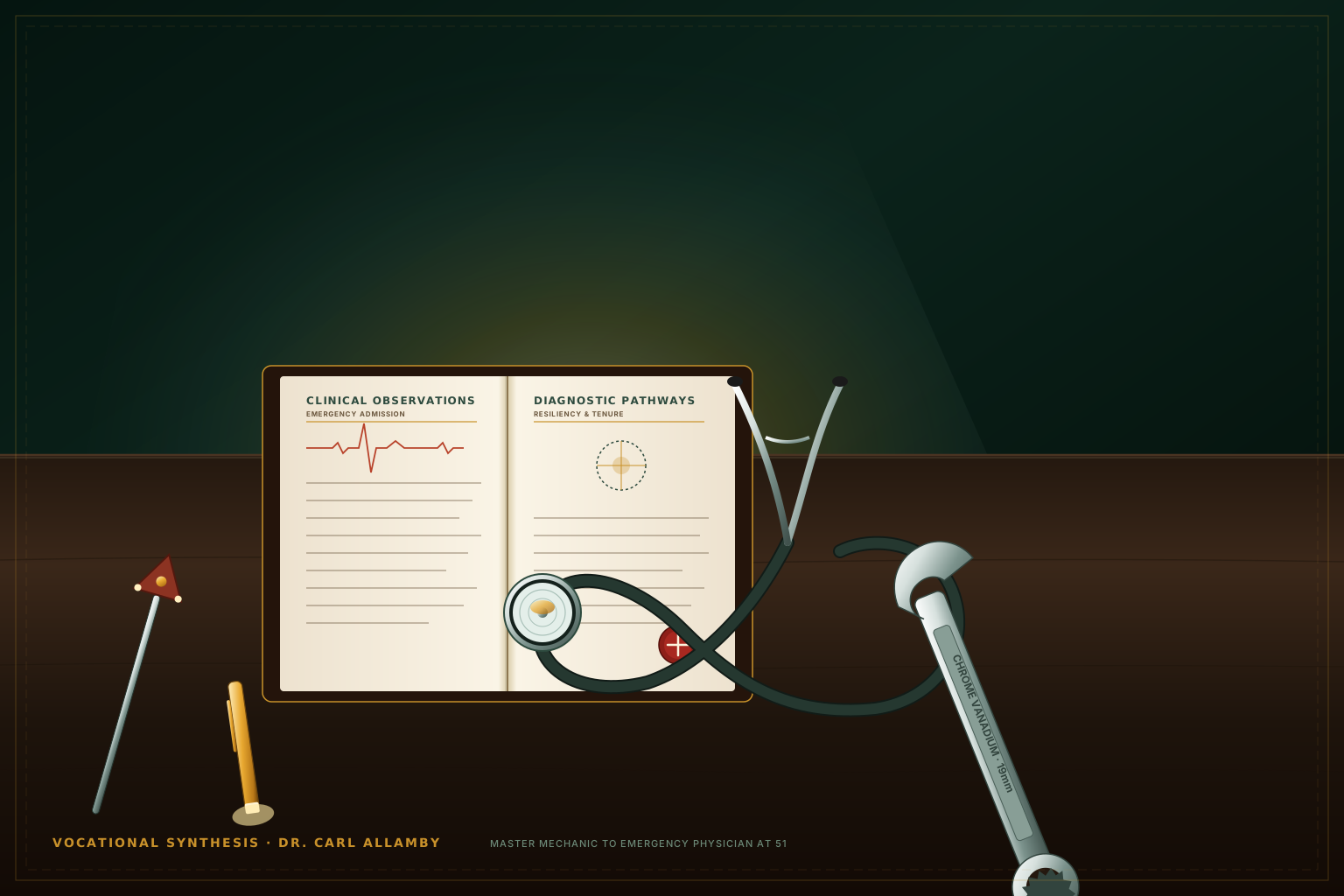
Years turned into decades. Carl spent more than twenty years repairing cars, managing employees, solving technical problems, and supporting his family. Medicine slowly became a dream he had set aside but never entirely forgotten. The common assumptions began to take hold: becoming a doctor was something younger people did, medical school took too long, and starting over would be irresponsible. Yet despite building a successful business, he never completely stopped wondering what might have happened if he had pursued medicine.
By age 40, he believed he had likely missed the opportunity. He had a wife, four children, financial obligations, and an established identity. Law school seemed reserved for younger people.
Like many adults approaching 40, he worried that the window had closed. Nursing school seemed reserved for younger people.
He taught public school for two years to save money before returning to pharmacy school and graduating at age 26.
He was rejected by Carnegie Mellon when he first applied for graduate school, told he was not smart enough to make the cut.
Before pursuing this path, Jane Addams worked as a studied at medical school briefly, showing that indirect experience often becomes a hidden advantage.
He spent over 30 years teaching high school in Brooklyn, grading papers, and telling stories to restless teenagers instead of publishing.
She had never gone to film school, never held a movie camera, and in her early 30s believed that directing was something other people were anointed to do.
By the time he began learning boxing, many future champions had already spent more than a decade training.
He entered Harvard Business School with zero family connections or inherited wealth, feeling out of place among country-club elites.
Her high school guidance counselor told her plainly: 'I'm not sure you're Princeton material.'
He spent his entire adult life fighting in the Punic Wars, managing farms, and prosecuting political corruption in Rome.
In his 20s, his speaking style was considered unrefined, his wardrobe disheveled, and his social presence awkward.
He left UNC early in 1984 to enter the NBA Draft, instantly becoming a global icon with the Chicago Bulls and Nike.
He spent 50 years driving trucks and raising children, always telling himself he was too old to sit in a classroom.
Like many adult learners, she faced practical responsibilities that made education difficult.
Decades of farming, raising four sons, and the loss of her husband in 1972 spaced her college credits across four decades.
In college and early adulthood, he intentionally arranged his schedule to avoid any class or event requiring verbal presentations.
He downloaded Blender when its interface was notoriously cryptic and confusing, spending months frustrated and unable to make basic shapes look good.
Before pursuing this path, Chuck Hull worked as a engineer, showing that indirect experience often becomes a hidden advantage.
By his late forties, he was almost completely broke, seriously considering quitting acting to drive a taxi in New York.
The speed of technological change creates the illusion that everyone else already understands the field.
She noticed that smartphones and mobile games were designed entirely for nimble teenage fingers, ignoring elder adults.
Before pursuing this path, Edward Said worked as a scholar, showing that indirect experience often becomes a hidden advantage.
Before pursuing this path, Patrick Moore worked as a raf navigator, showing that indirect experience often becomes a hidden advantage.
In the 1990s, the internet had no decentralized consensus mechanism; his ideas were dismissed as philosophical science fiction.
Before this path, Scotty Kilmer worked as a various.
Oscar Shapiro's journey challenges that assumption. He did not follow the traditional path of elite chess players who spend their childhood immersed in the game.
He spent decades in academic research laboratories at Cornell, publishing complex academic papers on distributed systems.
As a single mother raising two boys alone in Syracuse and Queens, she had zero free time, exhausted by corporate office work.
Sentenced to prison, banned from touching a computer for three years after release, treated by federal prosecutors as a cyber-terrorist.
Hollywood casting executives famously dismissed him with the brutal note: 'Can't act. Can't sing. Balding. Can dance a little.'
Before pursuing this path, Hadley Wickham worked as a statistics student, showing that indirect experience often becomes a hidden advantage.
In his thirties, he pitched internet email marketing to venture capitalists who told him that consumers would never buy things over computers.
It took her three months just to set up the dial-up connection and understand menus; she had never touched a computer during her entire bank career.
Grandma Moses spent nearly eight decades living an ordinary life. There were responsibilities to manage, bills to pay, children to raise, and work to complete. Art was not her profession and formal artistic training was never part of her path.
Before this path, Romeo Durscher worked as a nasa engineer.
Before pursuing this path, Thomas Piketty worked as a academic economist, showing that indirect experience often becomes a hidden advantage.
Before pursuing this path, Limor Fried worked as a mit student, showing that indirect experience often becomes a hidden advantage.
Before pursuing this path, Kevin Mitnick worked as a self-taught hacker, showing that indirect experience often becomes a hidden advantage.
Film school professors told him that movies required million-dollar equipment, 40-person crews, and massive studio financing.
Before pursuing this path, Dave Ramsey worked as a real estate investor (went bankrupt), showing that indirect experience often becomes a hidden advantage.
Before pursuing this path, Henry Dunant worked as a businessman, showing that indirect experience often becomes a hidden advantage.
After graduating with a CS degree in Seattle, every tech company rejected him; he took a job tearing tickets at the Paramount Theatre.
Before pursuing this path, Monty Don worked as a journalist and businessman (bankrupted), showing that indirect experience often becomes a hidden advantage.
By her early thirties, corporate record labels grew timid and corporate, so she walked away to start her own independent design partnership.
Decades passed filled with responsibilities, commitments, and priorities that seemed more urgent than learning an instrument.
Before pursuing this path, David McCullough worked as a sports illustrated writer, showing that indirect experience often becomes a hidden advantage.
Before pursuing this path, Donald Keene worked as a student, showing that indirect experience often becomes a hidden advantage.
By her mid-50s, she had already lived through decades of responsibilities. Most people would have considered language mastery unrealistic.
Before pursuing this path, Andrew Ng worked as a academic researcher, showing that indirect experience often becomes a hidden advantage.
Before pursuing this path, Mark Zuckerberg worked as a tech ceo, showing that indirect experience often becomes a hidden advantage.
Before pursuing this path, Leonard Bernstein worked as a pianist from childhood, showing that indirect experience often becomes a hidden advantage.
He volunteered on a late-night New York City suicide prevention hotline, spending hours listening to desperate people with pure empathy.
Having no college degree and zero Wall Street connections, he was evicted and spent nights sleeping in subway bathrooms and homeless shelters with his son.
She had struggled with undiagnosed dyslexia in school, was labeled dumb by teachers, and had zero corporate credentials.
Here are nearby questions and routes from people who began even later:
Suggested alternative searches: